
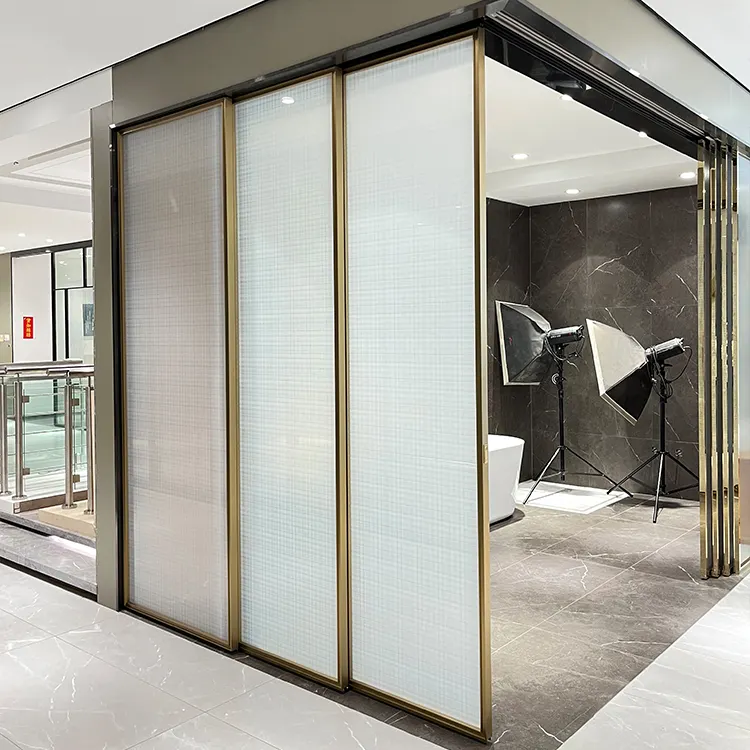
Modern glass office designs make use of ultra-modern aesthetics, natural daylight, and spaciousness. Nevertheless, one issue persists for all spaces: controlling noise. In spaces where glass partitions prevail, sustaining acoustic confidentiality as well as curtailing disturbances is imperative for sound productivity.
Fortunately, several design improvements and elements can be made to glass spaces to help look and feel quiet without breaking the stylistic feel of the space. Below are seven examples of glass office spaces:
1. Acoustic Laminated Glass
Acoustic laminated glass office blocking sound is one of the more optimal options available in today’s market.
- It has a unique polyvinyl butyral(PVB) layer sandwiched between 2 glass sheets.
- This polyvinyl butyral layer absorbs sound vibrations and minimizes the reduction in transmission of sound to a large extent.
- Excellent for use in private offices, executive cabins, as well as conference rooms.
Bonus:
Anecdotal records state that it also permits clear sight as well as safety while featuring high ratings in Sound Transmission Class (STC).
2. Double-Glazed Glass Panels
Double glazing simply refers to the addition of another pane of glass, creating a void between the two layers.
- The gap that is filled with gas or air serves as a sound insulator.
- Acts as a buffer for both outside noises as well as echoes within a room.
- Useful for quieter offices located in sophisticated urban or commercial circulation areas.
Besides improving acoustics, double-glazed panels have been cited to enhance thermal insulation, therefore building energy-efficient capabilities.
3. Acoustic Seals and Gaskets
Doors and windows are some of the quietest yet best places for sound leakage, as it can penetrate through even the most minute spaces and cracks.
- Use acoustic seals, sweeps, and gaskets around glass doors and frames.
- These block air gaps and minimize the discharge of sound.
- They’re easy to establish and fit well with frameless glass designs.
Consider drop-down door seals for jug doors to prevent noise from passing below.
4. Sound-Absorbing Wall Panels
Glass walls may be complemented by accompanying sound-absorbing materials on adjoining walls.
- Panels made of fabric, foam, or wood wool can absorb echo.
- Available in miscellaneous designs and colors to match commission aesthetics.
- Useful in open-plan scopes where total enclosure isn’t possible.
Install these near cooperative zones or common districts to limit background noise.
5. Acoustic Ceiling Tiles and Baffles
Noise again reflects from the ceilings, especially in cup-heavy interiors.
- Use acoustic ceiling slabs or suspended baffles to trap and absorb sound.
- They lower the echo and control overall room noise.
- Baffles can be personalized in shape, size, and color for additional design value.
Ideal for gathering rooms, hallways, and open work areas with glass partitions.
6. Smart Privacy Film with Acoustic Properties
Smart films also offer visual privacy.
- Some interpretations include acoustic-dampening layers that lower sound.
- They switch between opaque and obvious at the touch of a button.
- Perfect for multifunction spaces where solitude and quiet are occasionally necessary.
This solution is modern, complicated, and multi-functional.
7. Thick, Noise-Reducing Curtains or Screens
While frequently overlooked, acoustic curtains can be a proficient solution.
- Made from difficult, dense fabric that absorbs sound.
- Ideal for short-lived setups or spaces where flexibility is key.
- Can be pulled earlier if not needed, asserting the open feel.
Pair them with accompanying glass partitions to improve both sound control and visual aesthetics.
Conclusion
Integrating these soundproofing solutions ensures that up-to-date design and acoustic performance go hand in hand. Careful planning and the right association of materials can revamp even the most open glass commission into a serene and met environment.